 listicle
Eco Friendly Abstract Print Accessories: 2026 Guide
Table of Contents
- Quick Comparison: Eco Friendly Abstract Print Accessories
- Why Choose Stainless Steel Bottles for Abstract Print Accessories
- Sustainable Lifestyle Products: Materials That Matter
- Eco Friendly Abstract Print Accessories for Everyday Carry
- Eco-Friendly Packaging and Shipping for Print Accessories
- How to Identify Ethical Art Production and Certifications
- Maintenance and Longevity of Eco-Friendly Prints
- Frequently Asked Questions
Last Updated: September 23, 2026
Quick Comparison: Eco Friendly Abstract Print Accessories
Eco friendly abstract print accessories are everyday items, from stainless steel bottles to tote bags, that carry bold geometric artwork while being made from recycled, organic, or biodegradable materials. This guide from G4P covers the materials, certifications, and care routines that separate genuinely sustainable pieces from greenwashed ones.
| Accessory Type | Typical Material | Print Method | Best For |
|---|---|---|---|
| Stainless steel bottles | Recycled steel | Water-based inks | Daily hydration, gym, desk |
| Tech cases and sleeves | Recycled PU, felt | Non-toxic pigment | Laptop and phone protection |
| Tote bags | Organic cotton | Direct-to-garment | Shopping, commuting |
| Wallets | Recycled leather | Minimalist embossing | Low-waste everyday carry |
| Home accessories | Organic fabric | Water-based pigment | Eco-friendly decor |
Why Choose Stainless Steel Bottles for Abstract Print Accessories
Stainless steel bottles are the most practical entry point into sustainable lifestyle products: they replace hundreds of single-use plastic bottles and hold a printed design without fading.
Sustainable Lifestyle Products: Materials That Matter
Sustainable lifestyle products are designed, produced, and packaged to reduce environmental impact across their full lifespan. The difference between a genuinely eco-conscious accessory and a marketing claim usually comes down to two things: the ink and the base material.
Water-Based Inks and Non-Toxic Pigments
Water-based inks and non-toxic pigments avoid the heavy metals and volatile solvents in conventional plastisol and solvent inks. They cure at lower temperatures, cutting energy use, and do not leave a plastic layer on the fabric.
Recycled and Upcycled Materials in Print Accessories
Recycled and upcycled materials in print accessories range from repurposed leather offcuts to fabric reclaimed from production waste. Recycled content comes from processed waste; upcycled material is reused in a higher-value form without breaking it down.
Eco Friendly Abstract Print Accessories for Everyday Carry
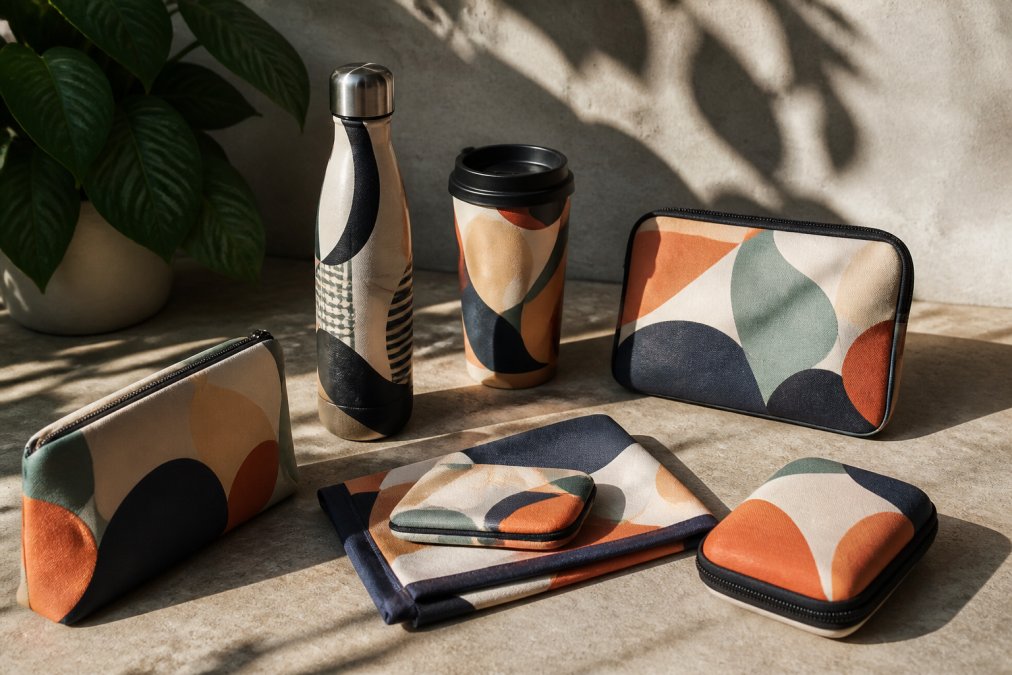
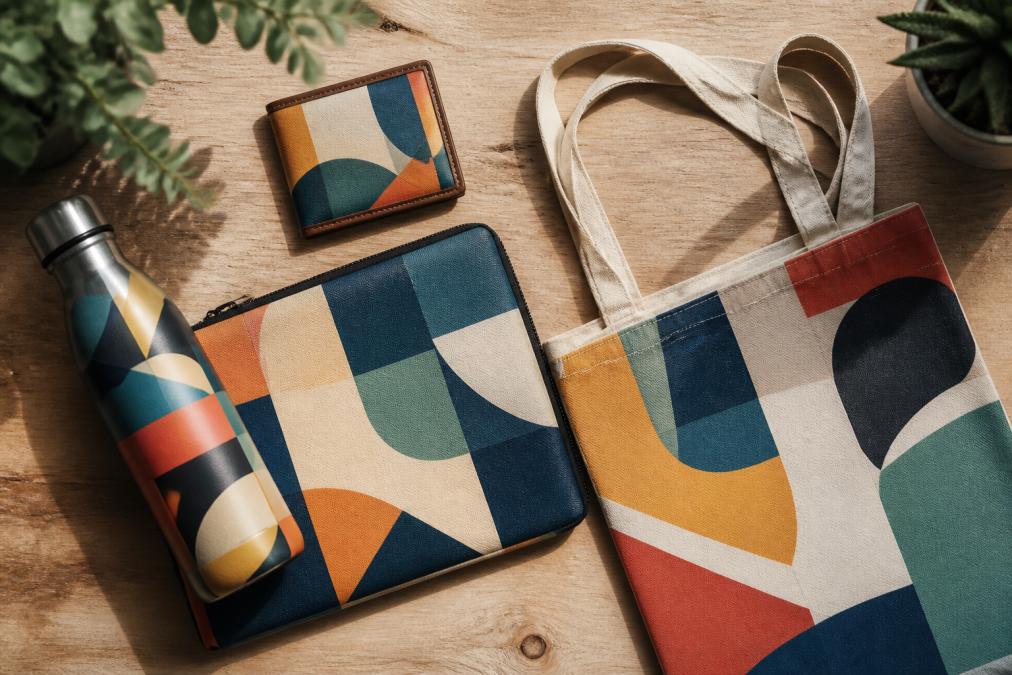
Everyday carry is where eco friendly abstract print accessories earn their place, because these are the items you touch daily and others see constantly. The category splits into four practical groups, each behaving differently once an abstract print is applied.
Tech Cases and Sleeves
Tech cases and sleeves made from recycled felt or recycled polyurethane protect laptops and phones while giving you a surface for bold artwork. Recycled felt takes a water-based pigment well because the fibres are porous, but it pills with friction, so a felt sleeve suits a bag rather than a pocket. Recycled polyurethane holds fine geometric detail more crisply, but the print can scuff at flexing corners.
Tote Bags and Wallets
Tote bags and wallets are where material quality shows fastest. A GOTS-certified organic cotton tote holds shape and print through repeated washing, while a recycled leather wallet develops a patina instead of cracking. Synthetic alternatives cost less upfront but fail within a year.
Bottles and Home Accessories
Stainless steel bottles and organic-fabric home accessories round out the set. On steel, the print is only as durable as the coating beneath it: a powder-coated base gives the ink grip, while a direct print on bare steel scratches away at the first contact with keys. On fabric home accessories such as cushion covers or tea towels, the same cold-wash, air-dry rule that protects a tote applies.
What to Check Before You Buy
- Base material and percentage: a named fibre with a recycled or organic share, not just "eco-friendly".
- Ink type: water-based pigment or direct-to-garment, stated explicitly.
- Construction detail: separate lining on cases, reinforced handles on totes, stitched rather than glued seams on wallets.
- Care instructions: if the maker does not publish them, the print is probably not designed to last.
These four checks take a couple of minutes and separate an accessory that survives two years of daily use from one that looks tired after two months.
Eco-Friendly Packaging and Shipping for Print Accessories
Eco-friendly packaging and shipping decide whether a sustainable accessory stays sustainable after it leaves the printer. A plastic-free parcel with unlaminated card and paper tape keeps the order consistent with the product inside, but the detail is in which materials actually recycle cleanly at home.
Materials That Work and Materials That Only Look Green
The reliable choices are straightforward. Uncoated recycled card and corrugated board break down in normal kerbside recycling. Paper tape with a gummed backing composts with the card rather than leaving a plastic strip. Paper-pulp or moulded-fibre inserts cushion a bottle or case without polystyrene. Glassine bags replace poly bags for smaller items.
What the Regulations Require
Packaging placed on the market is subject to producer responsibility rules, and the extended producer responsibility for packaging reforms oblige producers based on the weight and recyclability of what they put into circulation. A brand selling printed accessories must record packaging tonnage and contribute to the cost of managing it. Harder-to-recycle packaging attracts higher fees, one reason makers move to mono-material card.
Shipping Distance and Print-on-Demand
Print-on-demand helps by producing items close to the buyer, cutting shipping distance and the associated carbon footprint: a design is printed at a facility in the same region as the customer, so a tote or case travels a short domestic route rather than a long international one. That reduces both emissions and the packaging needed to survive a long journey.
End of Life for the Accessory Itself
Packaging is only half the story. When a printed accessory reaches the end of its life, the base material decides what happens next. Organic cotton textiles can be recycled through textile banks or composted if untreated, though the print may limit composting. Stainless steel is infinitely recyclable and holds real scrap value, making a steel bottle the easiest accessory to dispose of responsibly.
How to Identify Ethical Art Production and Certifications
Ethical art production is verifiable production: you can trace the base material, the ink, and the facility without relying on the brand's own marketing copy. Certifications and transparency labels let you check that claim in under five minutes.
Look for these markers before buying:
- GOTS certification on cotton goods, confirming organic fibre and restricted chemical use
- Oeko-Tex Standard 100 on inks and textiles, confirming tested safety limits
- FSC certification on paper and card packaging
- A named print method, such as water-based or direct-to-garment, rather than a vague "eco print" claim
- A published materials breakdown, listing the percentage of recycled or organic content
Maintenance and Longevity of Eco-Friendly Prints
Eco-friendly prints last as long as conventional ones when cared for correctly, and often longer, because water-based inks bond with the fibre instead of sitting on top of it.
Frequently Asked Questions
What makes an accessory eco-friendly?
An accessory is eco-friendly when its materials and production methods reduce environmental impact. Look for recycled or upcycled content, water-based inks instead of solvent-based ones, and plastic-free packaging. Certifications like GOTS for organic cotton or Oeko-Tex for non-toxic inks help verify claims. Durability matters too: a product that lasts five years has a lower carbon footprint than one replaced annually.
Are abstract print accessories sustainable?
They can be, but it depends on how they are made. Abstract prints applied with water-based, non-toxic pigments on organic or recycled base materials are far more sustainable than solvent-printed alternatives. Print-on-demand production also helps by making items only when ordered, which cuts waste.
Are stainless steel bottles better for the environment?
Yes, over time. A reusable stainless steel bottle replaces hundreds of single-use plastic bottles per year. Steel is infinitely recyclable and does not leach chemicals. Choosing one with a durable abstract print applied using non-toxic inks adds aesthetic value without compromising sustainability. The key is longevity: a well-made bottle used daily for years avoids the repeated manufacturing and shipping emissions of disposable alternatives. Look for bottles with replaceable lids to extend their life further.
What materials should I look for in sustainable tech cases?
Prioritise cases made from recycled plastics, recycled leather, or organic cotton canvas. Check that any print uses water-based or Oeko-Tex certified inks. Avoid PVC and virgin plastic where possible. Packaging should be plastic-free, ideally recycled pulp or unlaminated card. A durable case with reinforced stitching will outlast cheap alternatives, reducing waste.
How do I choose durable, eco-friendly accessories?
Start with material: recycled leather, organic cotton, and stainless steel all offer good durability. Check stitching and hardware quality. Look for transparency about production methods and certifications. Read reviews focused on longevity, not just appearance. For printed items, ask whether the ink is water-based and whether the print is cured properly, as this affects fade resistance. Proper care, like washing prints inside out in cold water, extends life significantly.
The real challenge with eco friendly abstract print accessories is not finding bold designs, it is finding pieces where the sustainability claim holds up under scrutiny. G4P builds its collection around exclusive geometrical design prints across stainless steel water bottles, tech cases, and lifestyle items, so you get functional everyday products with a modern aesthetic rather than plain goods with a green label. Browse the collection and subscribe for new geometric drops and material updates.