 How-to
7 Custom Afro Print Design Ideas That Stand Out
Last Updated: October 31, 2026
Quick Summary
Custom afro print design is the process of building an African-inspired pattern to your own brief, then applying it to a garment or product you actually want to wear or use. It starts with a story and ends with a finished piece, not a rack of identical rails.
- Write a one-sentence brief covering occasion, wearer and mood before opening any design tool.
- Build a seamless repeat tile first and check it at full garment, mid-distance and close-up scales.
- Supply print-ready artwork at 300 dpi in CMYK with 3 mm of bleed beyond the trim line.
- Choose one dominant colour, one secondary and one accent kept under roughly a tenth of the area.
- Screen printing suits small runs and bold geometrics, while digital handles fine detail without setup cost.
Table of Contents
- Why Custom Afro Print Design Beats Off-the-Rack Prints
- How to Create a Custom Afro Print Design, Step by Step
- Afro Print Pattern Ideas Worth Building a Piece Around
- African Print Colour Combinations That Actually Work
- Choosing Custom African Print Fabric for Wear and Wash
- Cultural Context: Using African-Inspired Motifs Responsibly
- From Print to Product: Apparel, Accessories and Everyday Gear
- Start Your Custom Afro Print Design With G4P
- Frequently Asked Questions
Why Custom Afro Print Design Beats Off-the-Rack Prints
A custom approach reverses that: you decide the repeat size, the palette and the placement, then the print follows.
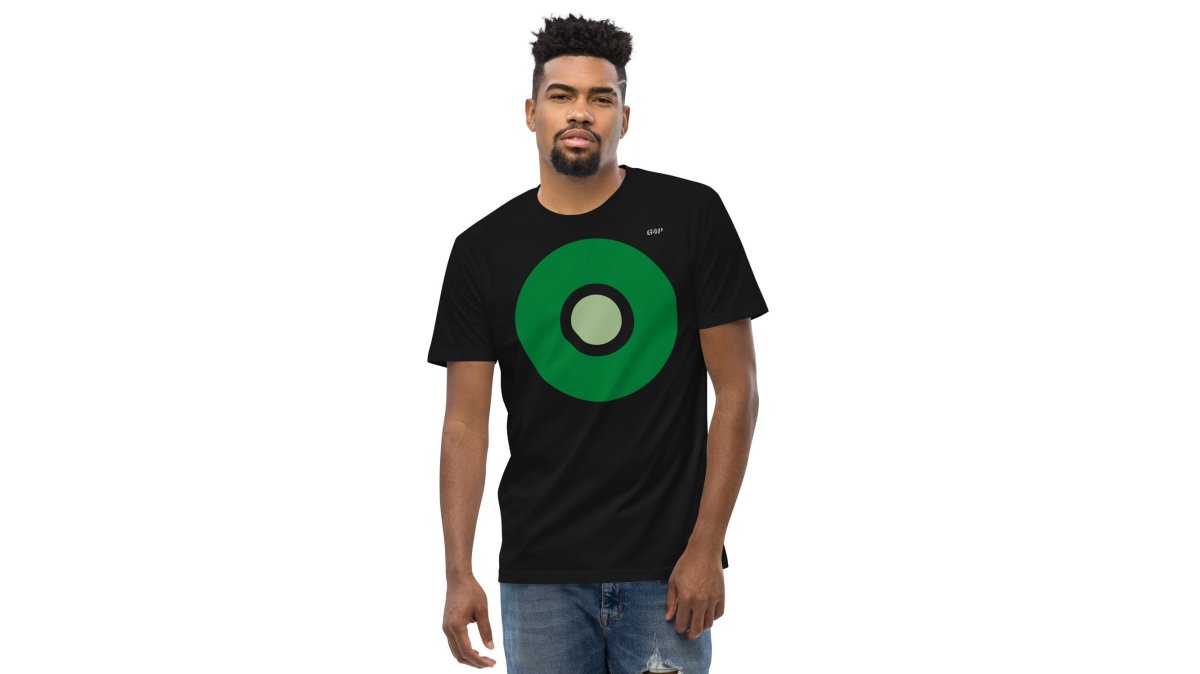
At G4P, we build our range around geometrical prints. Bold abstract pattern rewards a considered design decision.
The user-centred design research on African print fabric production makes the same point from an academic angle: when the wearer's preferences drive the design, the output fits better.
How to Create a Custom Afro Print Design, Step by Step
The workflow below describes one way to take a design from a rough idea to a print-ready file.
| Step | What You Do | Time | Output |
|---|---|---|---|
| 1. Define the story | Write the brief: occasion, wearer, mood | 30-60 min | One-paragraph concept |
| 2. Collect references | Gather motifs, colours, existing prints you like | 1-2 hours | Reference board |
| 3. Sketch the motif | Draw or source the core shapes | 2-4 hours | Motif artwork |
| 4. Build the repeat | Tile the motif into a seamless pattern | 2-3 hours | Repeating tile |
| 5. Set the palette | Choose 3-5 colours and test contrast | 1 hour | Colour sheet |
| 6. Prepare artwork | Set resolution, file format, bleed | 1-2 hours | Print-ready file |
| 7. Sample and check | Print a test, inspect scale and colour | 3-7 days | Approved sample |
Start With a Story, Not a Swatch
A common mistake is opening a design tool before you know what the piece is for. Decide the occasion first: a workwear piece needs a tighter repeat and a calmer palette than a festival jacket.
Write one sentence. "A geometric print for a winter hoodie, worn to work, in deep indigo and rust." That single line answers most of the design questions before they arise.
Build the Repeat Before You Build the Garment
Pattern repeat construction is where amateur designs fall apart. A motif that looks good alone often breaks when tiled, because edges don't meet and the eye catches the seam instantly.
Build a seamless tile first, then check it at three scales: full garment, mid-distance and close up. If the repeat reads cleanly at all three, the print will survive being cut and sewn.
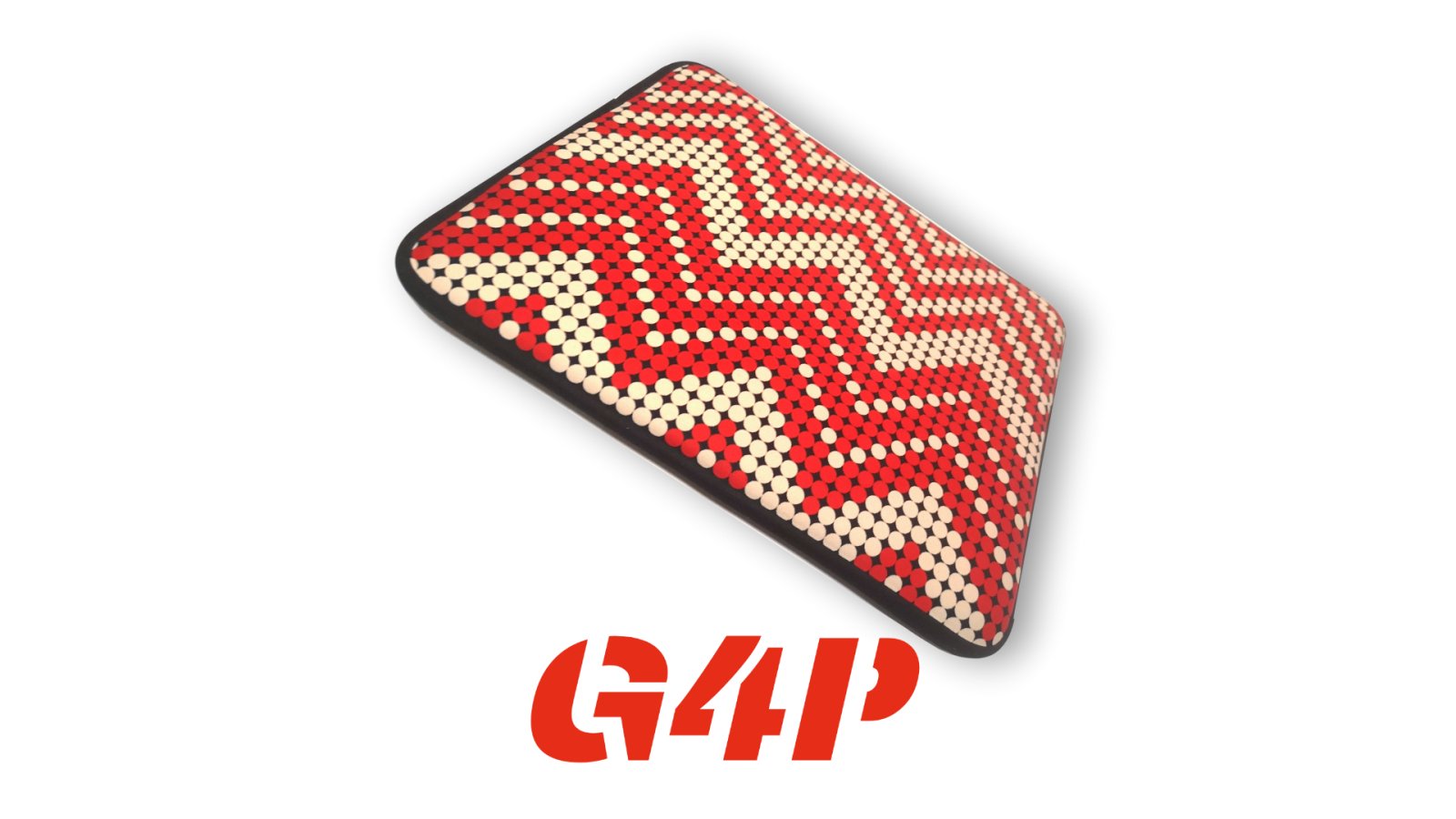
There are three repeat types worth knowing. A straight repeat tiles the motif in a simple grid and suits tight geometrics. A half-drop repeat offsets every other column by half the tile height, which hides seams better on larger motifs. A brick repeat staggers rows and works well for directional shapes such as stepped zigzags.
Prepare Print-Ready Artwork
This is the step most home designers skip, and it is the one that decides whether your file is accepted by a printer. Work to these specifications:
- Resolution: 300 dpi at final print size. A tile that looks sharp on screen at 72 dpi will pixelate on fabric.
- Colour mode: CMYK for fabric and product printing. RGB files shift when converted, so convert early and check the result.
- Bleed: add 3 mm of bleed beyond the trim line so the print does not stop short at the edge.
- File format: supply a flattened TIFF or PDF at print resolution; keep your layered working file separate.
- Repeat tile: deliver the seamless tile as a single square file, with the repeat type noted in the filename.
- Scale: state the printed motif size in millimetres, not just the tile size, so the printer can match your intent.
A useful habit is to print your tile on plain paper at final scale and pin it to a garment. It costs pence and catches scale errors before a sample run.
Test the Palette Under Real Light
Screen colours are backlit; fabric is not. Before you approve a palette, view your colour sheet under daylight and under indoor lighting. Deep indigos and emeralds often read darker on cotton than on a monitor, while ochres and terracottas can warm up. Adjust the file, not the expectation.
Sample and Sign Off
Order a physical sample before any full run. Check four things: motif scale against the garment, colour against your swatch book, repeat alignment across seams, and print sharpness on the chosen fabric. Approve in writing, with the sample retained as the reference standard.
Afro Print Pattern Ideas Worth Building a Piece Around
The strongest Afro print pattern ideas tend to be geometric rather than pictorial. Interlocking diamonds, stepped zigzags, concentric circles and offset grids all tile cleanly and read well at any scale.
Five directions worth testing:
- Offset diamond grids for a structured, architectural feel
- Stepped zigzags for movement across a sleeve or panel
- Concentric circles for a softer, rhythmic repeat
- Interrupted stripes for a modern, less literal look
- Mixed-scale geometry for depth without clutter
Pick two, not five. A single strong idea carried through the whole piece beats a busy collage every time.
African Print Colour Combinations That Actually Work
Reliable African print colour combinations follow contrast rules, not guesswork. Choose one dominant colour, one secondary and one accent, then keep the accent under roughly a tenth of the total area.
Three palettes that hold up in practice:
- Indigo, ochre and cream for a grounded, wearable base
- Terracotta, charcoal and sand for autumn and winter pieces
- Emerald, black and gold for statement occasion wear
Watch out: bright colours shift once printed on fabric, so always approve a physical sample before committing to a full run. Screen tones that look crisp on a monitor often dull on cotton.
Choosing Custom African Print Fabric for Wear and Wash
Fabric choice decides how long your print survives, and printing method decides how faithfully it reproduces. Treat the two as a pair: the right method on the wrong fabric still disappoints.
Match the Fabric to the Garment
| Fabric | Best for | Print behaviour | Watch out for |
|---|---|---|---|
| Cotton poplin | Shirts, dresses, accessories | Crisp detail, strong colour | Creases; iron inside out |
| Cotton jersey | T-shirts, loungewear | Good stretch recovery | Print can crack on high-stretch areas |
| Brushed fleece | Hoodies, outerwear | Soft hand-feel, slightly muted colour | Pilling on low-quality blends |
| Polyester blend | Tech cases, water bottles, activewear | Vivid colour, fast drying | Can pill; heat-sensitive |
| Linen | Summer shirts, totes | Textured, matte finish | Colour reads softer than on cotton |
- How often will the piece be washed?
- Does the print sit on a high-friction area such as a cuff or underarm?
- Will the garment be ironed directly over the pattern?
Compare Printing Methods
- Screen printing suits small runs and bold geometrics. It lays down opaque ink, holds colour well on cotton, and is cost-effective once screens are set. Setup cost per colour makes it less economical for very short runs or photographic detail.
- Digital direct-to-garment (DTG) handles fine detail and many colours without setup cost, which suits one-off pieces and complex repeats. Colour can be less opaque on dark fabrics, and durability depends on pre-treatment and wash care.
- Dye sublimation bonds colour into polyester, giving vivid, durable results with no hand-feel. It does not work on natural fibres such as pure cotton.
- Reactive digital printing on fabric gives soft hand-feel and good wash fastness on cotton and viscose, and is the usual route for cut-and-sew garments rather than finished products.
A common pattern is to use screen printing for a tight repeat in two or three colours and digital printing where the design needs gradients or many tones. Match the method to the motif, not the other way round.
Understand How Fabric Changes Colour and Detail
Bright colours shift once printed on fabric. Screen tones that look crisp on a monitor often dull on cotton, and fine lines below about 0.5 mm can fill in on textured weaves. Heavier fleece softens edges; polyester holds sharpness but can look glossy. Always approve a physical sample on the final fabric before committing to a full run.
Plan for Wash and Care
If you are building a printed hoodie, our guide on how to wash printed hoodies without ruining the design covers the practical routine that keeps colour and shape intact.
Cultural Context: Using African-Inspired Motifs Responsibly
African-inspired design carries history, and treating motifs as anonymous decoration is where brands get into trouble. Ankara and related print traditions have specific regional roots, meanings and makers.
Responsible use means three things: credit the tradition you are drawing on, avoid copying sacred or ceremonial symbols you don't understand, and support designers with genuine links to those traditions. Research into AI-assisted African print design shows the design community is actively exploring where technology fits, which makes the human context more important, not less.
A geometric print inspired by a tradition is fine. Passing off a copied ceremonial motif as your own is not.
From Print to Product: Apparel, Accessories and Everyday Gear
A finished print earns its keep when it moves beyond one garment.
That is how we build our range at G4P: one geometric language, applied across apparel and functional accessories. The print does the talking; the product stays useful.
Screen printing remains a practical route for small runs, and practice-based research on simulating African print fabrics confirms it can reproduce detailed patterns faithfully in a studio setting.
Start Your Custom Afro Print Design With G4P
The gap between a good idea and a wearable piece is usually the production step, not the inspiration. That is the part we handle.
If you want to understand why a considered, well-made piece costs more than a mall hoodie, read our breakdown of why premium hoodies are worth it. Then explore the range and see how geometric prints translate onto real products in our sustainable geometric lifestyle brand review.
At G4P, every piece starts with an exclusive geometrical design print and ends as a functional everyday item. Bold abstract pattern, applied to apparel and accessories you will actually use.
Get started with G4P and turn your afro print design idea into a piece you wear with confidence.
Frequently Asked Questions
How do you create a custom Afro print design from scratch?
Start with a reference you respond to, then reduce it to two or three shapes you can repeat. Sketch the motif by hand or in a vector tool, build a tile that joins seamlessly on all four edges, and test it at the size it will print. Check the repeat on a small fabric sample before committing to a full run. The step-by-step workflow in this guide covers motif, repeat, colour and fabric in that order, which keeps the print coherent instead of busy.
Which African print colour combinations work best for everyday wear?
Pair one saturated colour with two neutrals: indigo with sand and charcoal, or ochre with cream and deep brown. High-contrast pairings such as orange and teal read as bold and suit statement pieces, while tonal combinations in the same family look calmer and work well for workwear. Test your palette at 10 percent scale first. A combination that looks balanced in a small swatch usually holds up across a full garment.
Can you customise an African print for both clothing and accessories?
Yes. The same artwork can be applied across the products G4P offers, but the repeat scale needs adjusting for each. A motif sized for a jacket back will look oversized on a phone case, so prepare two or three scale versions of the same tile.
How do you choose custom African print fabric that lasts?
Match the fabric to the printing method and the wash cycle.