 blog
Durable Artistic Hoodies for Daily Wear: 2026 Guide
Table of Contents
- Why Durability Matters in Artistic Hoodies for Daily Wear
- The Best Fabric for Durable Hoodies: Cotton, Blends, and Weights
- How to Wash Printed Hoodies Without Fading or Cracking
- Unique Graphic Hoodies for Men: Fit, Styling, and Everyday Wear
- Repairability and Circularity: Making Your Hoodie Last Beyond Trends
- Sustainability vs. Durability: What Eco-Conscious Buyers Should Know
- Conclusion
- Frequently Asked Questions
Last Updated: September 12, 2026
Why Durability Matters in Artistic Hoodies for Daily Wear
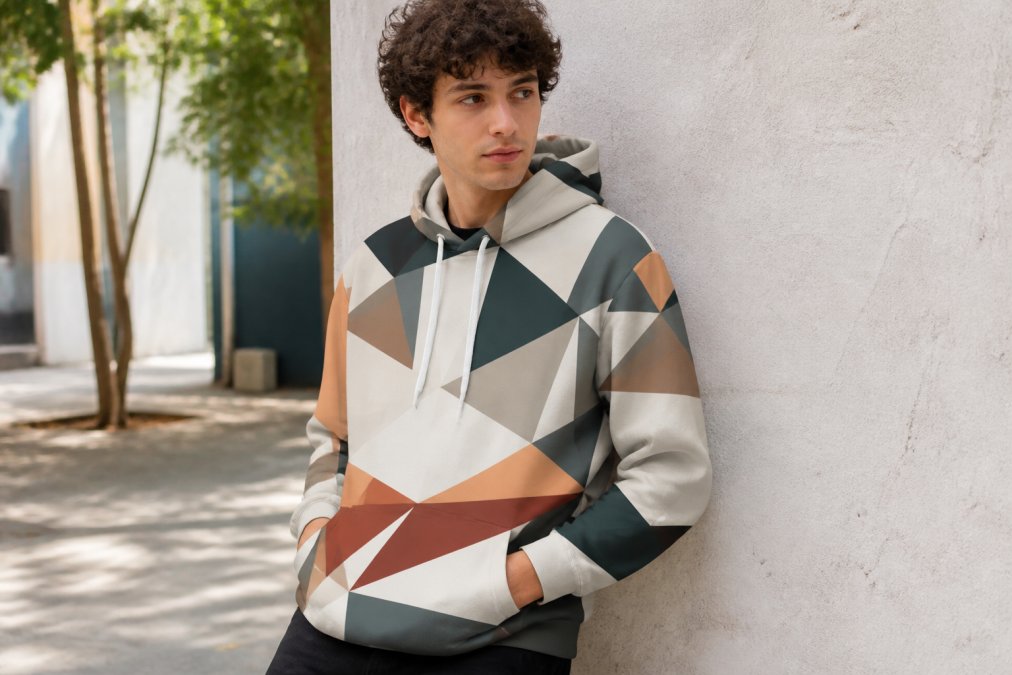
The global hoodies and sweatshirts market is projected to reach $256.08 billion in 2026, according to Fortune Business Insights market analysis, and that growth is driven largely by buyers who want one hoodie that survives years of daily rotation rather than three that fade by spring. Durable artistic hoodies for daily wear sit at the intersection of two demands: a print that still looks sharp after fifty washes, and a garment that holds its shape through all of them. At G4P, our geometric-print hoodies feature bold abstract designs on durable fabric.
Here is the uncomfortable truth most buying guides skip: the print is rarely what fails first. The fabric does.
A cheap hoodie pills at the cuffs, loses its drape, and shrinks half a size by month three. The graphic then cracks because the surface beneath it has warped. Below, we break down fabric weights, wash routines, fit, and repairability so you can choose a printed hoodie that earns its place in your wardrobe.
The Best Fabric for Durable Hoodies: Cotton, Blends, and Weights
The best fabric for a durable printed hoodie is a heavyweight, tightly knit cotton or cotton-rich blend, typically 100% ring-spun cotton at 10-12 oz (roughly 340-400 GSM), a specification that industry guidance for 2026 identifies as the optimal balance between fabric durability and print quality, per Moebeer's 2026 hoodie material guidance. Heavier than that and the garment becomes stiff; lighter and the print has too little surface to bond with.
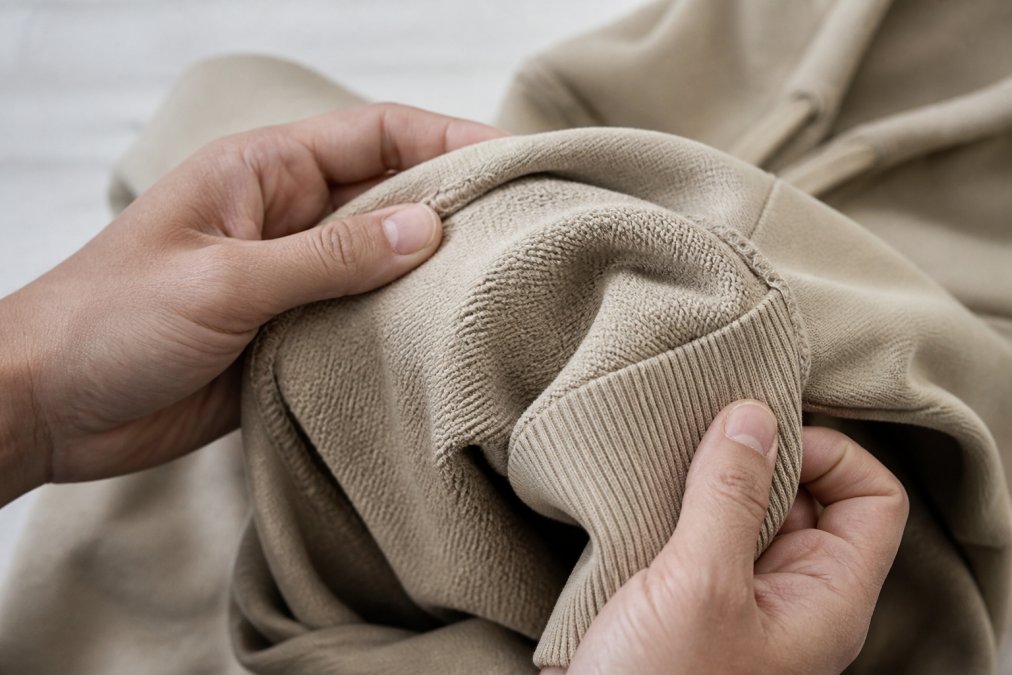
But the headline number hides the part that actually decides whether a hoodie survives daily wear: how the yarn is spun, how densely it is knitted, and how the print is bonded to it. Three variables do most of the work.
Fibre length. Ring-spun cotton uses longer, combed fibres twisted tightly together. Longer fibres mean fewer exposed ends, and fewer exposed ends mean less pilling at the cuffs and underarm where friction is constant. Open-end (rotor-spun) cotton is cheaper and shorter-stapled; it feels rougher and pills noticeably faster. If a listing does not say ring-spun, assume open-end.
Knit density. Two hoodies can both claim 350 GSM and behave completely differently. A denser knit with a tighter gauge resists distortion and holds the print surface flat; a looser knit of the same weight stretches at the shoulders and lets the ink flex and crack. Stitch density at the cuffs and hem is the cheapest visible proxy, hold the ribbing up to the light and compare.
Blend ratio. A small percentage of polyester (typically 10-20%) added to cotton improves abrasion resistance and reduces shrinkage, which is why many performance-leaning hoodies use a cotton-poly blend. The trade-off is breathability and hand-feel: blends can feel slightly slicker and trap more heat. For a printed hoodie worn daily, a 80/20 cotton-poly blend is a defensible compromise; for maximum comfort and print quality, 100% ring-spun cotton at the heavier end of the range still wins.
Loopback vs. French Terry: What Lasts Longer?
Loopback and French terry are both knit constructions with loops on one side, but they behave differently over time. French terry is smoother and lighter, which suits layering but shows pilling sooner under friction. Loopback is denser and holds its structure through repeated washing, which is why it dominates the heavyweight category. If longevity is your priority, loopback wins.
GSM and Fabric Weight: Finding the Sweet Spot
GSM, or grams per square metre, is the single number that predicts how a hoodie will age. Under 280 GSM, the fabric is thin enough that prints sit close to the surface and crack early. Between 300 and 400 GSM, you get the sweet spot: enough tensile strength to resist distortion, enough breathability to wear indoors. Above 450 GSM, you are buying a jacket, not a hoodie.
How the Print Is Applied Matters as Much as the Fabric
The most durable fabric in the world will still fail if the graphic is applied badly. Screen printing with properly cured plastisol or water-based ink sits on top of or slightly into the fibre and flexes with the garment; heat-transfer vinyl sits as a film on the surface and peels at the edges first. Direct-to-garment (DTG) printing is convenient for small runs and complex artwork but bonds less deeply into heavyweight loopback, which is why DTG graphics on thick hoodies tend to fade faster than screen-printed equivalents. For a geometric or abstract print intended for daily wear, the print method and fabric combination are important for longevity.
How to Wash Printed Hoodies Without Fading or Cracking
Wash printed hoodies inside out, in cold water, on a gentle cycle, and never tumble dry them. Heat is what breaks down the bond between ink and cotton, and it is the leading cause of cracked graphics. Airing them flat preserves both the print and the ribbed cuffs.
That is the standard advice, and it is correct, but it is also where most guides stop. The reason cold water and air-drying work comes down to two mechanisms: thermal contraction and mechanical abrasion. Understanding them tells you which habits actually matter and which are folklore.
Thermal contraction. Cotton fibres relax and swell in hot water, then contract as they dry. Cured ink does not contract at the same rate. Every hot wash-and-dry cycle pulls the fabric away from the print by a fraction of a millimetre, and those fractions accumulate into hairline cracks. Cold water keeps the fibre dimensionally stable, so the ink and the cotton move together.
Mechanical abrasion. The inside of a tumble dryer is a tumbling drum of friction. Every cycle scuffs the surface of the print and the ribbing at the cuffs, which is why dryer use, not washing, is the single biggest driver of visible wear. Line-drying or laying flat removes that friction entirely.
A few habits separate a print that lasts five years from one that lasts five months:
- Turn the hoodie inside out before it goes in the machine
- Use cold water and a mild detergent, no fabric softener
- Skip the dryer entirely; hang or lay flat to dry
- Wash with similar colours to reduce abrasion
- Never iron directly over the print
What most guides miss is that shrinkage and print damage are linked. Hot water shrinks the cotton, and as the fabric contracts, the cured ink does not follow, which is exactly how hairline cracks appear.
What Long-Term Wash Testing Actually Shows
Style-editor opinions dominate this category, but the more useful signal comes from repeated-wash testing, the kind of data that tracks shrinkage, pilling, and colour retention across dozens of cycles. A common pattern reported by textile testers is that a well-made 350-400 GSM ring-spun hoodie will typically shrink 2-4% after the first hot wash and then stabilise, while a lighter 250-280 GSM hoodie can shrink 5-8% and continue creeping over subsequent cycles. Pilling follows a similar curve: light fabrics show surface fuzz within 10-15 washes, whereas dense loopback often holds a clean surface past 30.
Colour retention is the variable most buyers underestimate. Dark, saturated prints, deep indigo, black, oxblood, fade fastest under UV and repeated washing because the dye molecules are larger and sit closer to the fibre surface. Muted or mid-tone colourways hold noticeably longer. If you want a bold geometric print to stay sharp, choose a mid-tone base and wash it less often than you think you need to.
Tumble drying a printed hoodie at high heat is the fastest way to destroy it. The fabric shrinks while the print stays fixed, and the resulting tension cracks the graphic within a handful of cycles.
A Realistic Washing Schedule
Daily-wear hoodies do not need washing after every wear. Unless the garment is visibly soiled or smells, airing it overnight and spot-cleaning marks is usually enough. Washing every two to three wears, rather than every wear, cuts the number of abrasion cycles by more than half over a year, which is the simplest durability upgrade available to you.
Unique Graphic Hoodies for Men: Fit, Styling, and Everyday Wear
Unique graphic hoodies for men work best when the fit matches the print. A bold geometric pattern on an oversized fit reads as a statement piece; the same print on a standard fit reads as everyday wear. Neither is wrong, but they belong in different parts of your wardrobe.
For sizing, the key measurements are shoulder width, body length, and sleeve length. An oversized fit should drop one size beyond your standard, no more. Beyond that, the shoulders slump and the silhouette loses its shape, which makes even a well-made hoodie look tired.
Styling a geometric print is simpler than it sounds. Treat the hoodie as the loudest item in the outfit and keep everything else neutral: plain trousers, a solid jacket, minimal accessories. If you work in a corporate environment, an oversized hoodie in a muted colourway under a structured coat reads as considered rather than casual.
Repairability and Circularity: Making Your Hoodie Last Beyond Trends
Repairability is the durability topic almost nobody covers, and it is where the biggest gains sit. A hoodie with reinforced seams at the shoulders, cuffs, and hem can be repaired rather than replaced when stress points give way. That single construction detail can double a garment's working life.
Circularity follows from the same logic. A hoodie you keep for five years displaces four or five replacements, and the environmental saving is real. Cost-per-wear tells the same story: a premium hoodie worn 200 times over five years costs less per wear than a cheap alternative, according to Shop Vitality's cost-per-wear analysis.
The practical checklist for a repairable hoodie:
- Reinforced stitching at shoulder and cuff seams
- Replaceable drawstring with metal-tipped ends
- Colour-fast dye that survives repeated washing
- A brand that offers or supports repair
That last point matters more than most buyers realise. A hoodie designed for repair is designed to be kept.
Sustainability vs. Durability: What Eco-Conscious Buyers Should Know
Sustainability and durability usually pull in the same direction, but not always. Organic cotton uses less water and fewer pesticides, yet it can be less abrasion-resistant than conventional cotton unless it is woven at a heavier weight. The trade-off is real, and honest brands name it.
Where the two goals align is in longevity. A hoodie that lasts five years needs no sustainability marketing to justify itself; it simply does less harm by existing longer. The Dataintelo hoodie market report projects the hoodies and sweatshirts market reaching $163.8 billion by 2034, and much of that growth is coming from buyers who treat durability as the primary sustainability metric.
For printed hoodies specifically, the fabric-print match matters. A heavy-weight organic cotton exterior with a brushed interior supports high-quality graphic application without the cracking that plagues lighter fabrics, per Printful's 2026 blank apparel guidance. The trade-off between artistic print longevity and fabric durability is genuine: heavy fabrics last, but the print must be matched to the fabric to avoid fading during daily wear and washing.
Conclusion
Choosing a durable artistic hoodie comes down to three things: fabric weight in the 10-12 oz range, a loopback or dense French terry construction, and a wash routine that respects the print. Get those right and a single hoodie can outlast several cheaper replacements.
Our exclusive geometric design prints sit on heavyweight fabric chosen for everyday wear, and our range extends to windbreakers, stainless steel water bottles, and tech cases for anyone who wants their everyday items to carry the same aesthetic. If you want apparel that expresses your style without falling apart in the wash, explore the G4P collection and subscribe for new print drops.
Frequently Asked Questions
What features make a hoodie durable for daily wear?
Look for heavyweight fabric (around 300-400 GSM), reinforced seams, and high stitch density. A cotton-poly blend can improve tensile strength and reduce pilling. Ribbed cuffs and a sturdy drawstring also add longevity. For artistic hoodies, ensure the print method suits the fabric; for example, 100% ring-spun cotton at 10-12 oz is optimal for graphic application. These features help the hoodie withstand frequent washing and everyday use without losing shape or print quality.
How do I maintain the print quality on artistic hoodies?
Wash printed hoodies inside out in cold water on a gentle cycle. Avoid fabric softener and bleach, which can degrade the print. Tumble dry low or hang dry to prevent cracking. If ironing, do not iron directly on the print. Following these steps keeps colours vibrant and prevents fading or cracking. For heavy-weight fabrics, a longer wash cycle may be needed, but always check the care label. Proper care extends the life of both the fabric and the artwork.
Are heavy-weight cotton hoodies better for everyday use?
Heavy-weight cotton hoodies (over 300 GSM) offer better durability and structure, making them ideal for daily wear. They resist pilling and hold their shape after repeated washes. However, they may feel warmer, so consider breathability for milder days. A cotton-poly blend can balance weight and quick-drying properties. For artistic prints, heavy-weight fabric provides a stable base that prevents print distortion. Ultimately, the best choice depends on your climate and layering needs.
How can I style artistic hoodies for a smart-casual look?
Pair a geometric or abstract hoodie with tailored trousers or dark jeans and a structured jacket. Choose a hoodie in a neutral base colour with subtle patterns for a more office-friendly vibe. Layering over a collared shirt can add polish. Keep the rest of your outfit simple to let the hoodie stand out. For a relaxed but put-together look, opt for a standard fit rather than oversized. This approach works well for creative workplaces and weekend outings.