 blog
Best Geometric Fashion Trends 2026: 7 Looks to Wear Now
Last Updated: October 25, 2026
Quick Summary
The best geometric fashion trends 2026 are led by Mid-Century Squares, named in Plumager's SS26 forecast, alongside dots, checks, bold stripes and chevrons. Wear small-scale checks and fine grids for work, large chevrons and squares at weekends, and oversized dots on satin for evenings. Let the pattern lead and keep everything else plain.
- Mid-Century Squares are the easiest geometric print to wear because the grid gives the eye a regular rhythm.
- Check that square prints align at the shoulder and side seams before buying, since a broken grid looks budget.
- Mix dots and checks by holding one variable constant: scale, colour or motif type.
- Vertical stripes lengthen, horizontal bands widen and chevrons draw the eye diagonally.
- Test a motif's scale on an accessory like a tech case before translating it to clothing.
Table of Contents
- Why Geometric Prints Rule the 2026 Fashion Print Trends
- 1. Mid-Century Squares: The Leading Geometric Pattern in Fashion
- 2. Dots and Checks: Two Print Trends Worth Learning to Mix
- 3. Bold Stripes and Chevrons: Geometry That Flatters
- How to Style Geometric Prints Without Overwhelming an Outfit
- Geometric Print Outfits for Work, Weekends and Evenings
- Choosing Geometric Patterns by Scale and Body Proportions
- Shop the G4P Geometric Edit
- Frequently Asked Questions
Why Geometric Prints Rule the 2026 Fashion Print Trends
Geometric prints are the defining story of the best geometric fashion trends in 2026, and the evidence is unusually clear for a trend still taking shape.
Here is the useful part most trend roundups skip. Geometric prints are not one trend but a family of them, and each member behaves differently on the body, in the office and at the checkout. Get the family right and you can wear the trend for years.
Below, we break down the seven geometric looks worth buying in 2026, how to style each one, and how to choose patterns by scale so they flatter rather than overwhelm.
1. Mid-Century Squares: The Leading Geometric Pattern in Fashion
Mid-century squares are the geometric pattern in fashion to watch this year: grids of clean squares in retro palettes, drawn from 1960s and 1970s print archives.
The trick is scale. Small squares read as texture from a distance and suit shirts, socks and tech cases. Large squares turn a garment into a statement, so keep the rest of the outfit plain. We would pair a big-square windbreaker with dark denim and nothing else patterned.
Watch out: cheap square prints often misalign at the shoulder and side seams. Check the seam match before you buy, because a broken grid is the fastest way to make a considered print look budget.
2. Dots and Checks: Two Print Trends Worth Learning to Mix
Dots and checks are the two most wearable print trends of 2026, and they mix better than most people expect. Heuritech's Top 10 2026 fashion trend forecast lists both "Dots Dots Dots" and "Variations of Checked" among its forecasted directions, which tells you the classics are being reworked rather than retired.
Polka dots in 2026 skew graphic: oversized spots, uneven spacing, high contrast. Checks have moved toward plaid and gingham in saturated colour. To mix them, hold one variable constant. If both patterns are large, keep the colour palette tight. If the colours clash deliberately, shrink one pattern to a trim or lining.
- Dots plus fine check: safe, office-ready
- Large check plus small dot: weekend energy
- Plaid plus grid: only if the scales differ sharply
3. Bold Stripes and Chevrons: Geometry That Flatters
Bold stripes and chevrons are the most flattering geometric prints because direction does the work. Vertical stripes lengthen. Chevrons, the zigzag V shapes Pinterest flags in its 2026 predictions, draw the eye diagonally and add movement to a still outfit.
Direction matters more than colour here. A chevron pointing upward across the torso lifts the eyeline; a horizontal band across the widest point does the opposite.
Stripes also carry the season's colour trends well. Cherry red and dopamine brights look sharpest as a bold stripe against a neutral base, which keeps the print wearable beyond one season.
How to Style Geometric Prints Without Overwhelming an Outfit
Styling geometric prints comes down to one rule: let the pattern lead and keep everything else quiet. A geometric garment is already doing the visual work, so a plain base layer, one solid colour and simple shoes will always outperform a competing print. But the rule only becomes useful when you apply it to specific combinations, so here is how to make geometric motifs work across the settings you actually dress for.
The three-variable method for pattern mixing
Pattern mixing fails when too many variables change at once. Treat every outfit as having three dials: scale, colour and motif type. Hold at least two steady and move only one.
- Same motif, different scale. A fine gingham shirt under a large-check blazer works because the motif repeats but the scale shifts. This is the safest way to wear two geometrics together.
- Same scale, different motif. A medium polka-dot top with a medium-width stripe trouser can work if the colour palette is restricted to two tones plus a neutral.
- Same colour family, different motif and scale. The boldest option: a cherry-red chevron knit with a small red-and-cream check scarf. Keep everything else, trousers, shoes, bag, in solid neutrals.
A common mistake is mixing a geometric print with a floral or animal print at full strength. If you want that combination, shrink the second print to an accessory: a geometric-print scarf over a plain coat, or geometric socks beneath a solid trouser break.
Occasion formulas that actually work
Work. Choose small-scale checks, fine grids or pinstripes on tailored pieces. Pair a geometric blazer with plain trousers in a colour pulled from the print, and keep the shirt solid. Avoid oversized motifs on tailoring, they read as costume rather than considered.
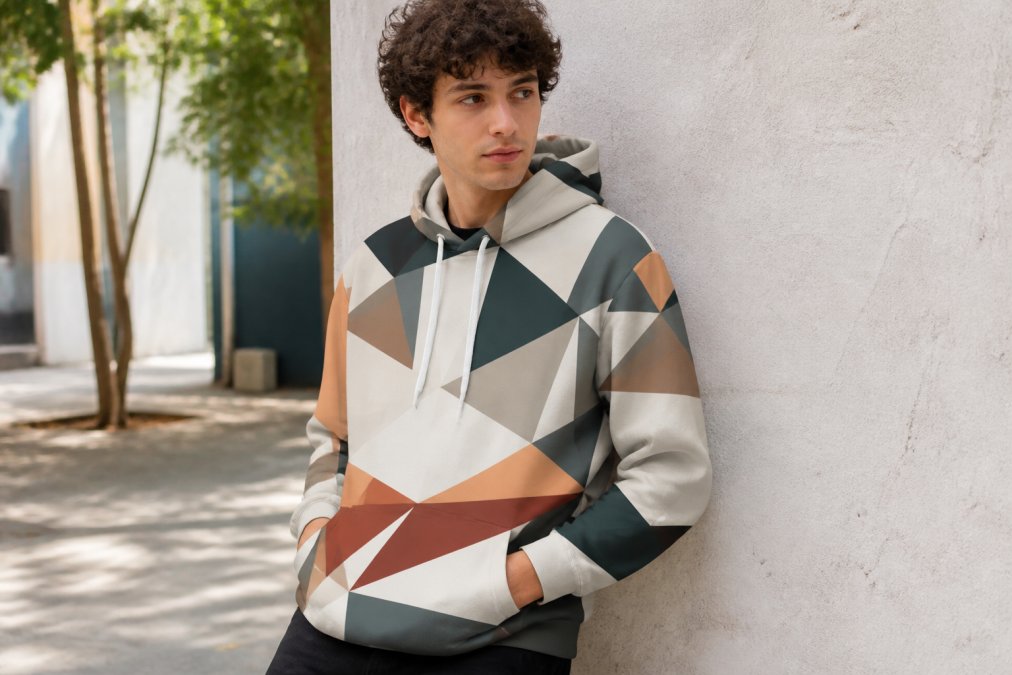
Weekend. Go bigger and more casual. A chevron hoodie or large-square windbreaker over raw denim and a plain tee is the reliable uniform.
Evening. Dots on satin or silk basics work because the fabric's sheen softens the graphic edge. A single oversized-dot top with plain black trousers and minimal jewellery reads as deliberate rather than loud.
A common mistake is treating geometric prints as evening-only. The opposite is true: a single geometric piece, worn against neutrals, reads as considered rather than loud. For readers building a work wardrobe around this, our guide to styling bold geometric patterns for work goes deeper on office-ready combinations, and wearing abstract patterns for work covers the confidence question if bold prints feel like a stretch.
Geometric Print Outfits for Work, Weekends and Evenings
Geometric print outfits work across all three settings if you match the motif to the occasion. The same print family behaves differently depending on scale, fabric and what sits next to it.
For work, choose small-scale checks or fine grids on tailored pieces, then pair with soft tailoring and plain trousers. For weekends, go bigger: a chevron hoodie or square-print windbreaker over raw denim. For evenings, dots on satin basics work because the fabric's sheen softens the graphic edge.
| Occasion | Best motif | Scale | Pair with |
|---|---|---|---|
| Work | Fine check, small grid | Small | Plain tailoring, neutral trousers |
| Weekend | Chevron, large squares | Large | Raw denim, plain tee |
| Evening | Oversized dots | Medium to large | Satin basics, simple accessories |
Choosing Geometric Patterns by Scale and Body Proportions
Choosing the right geometric pattern is mostly a question of scale relative to your frame, but the useful advice goes further than 'small for small, large for large'. Motif size, repeat density and placement all change how a garment reads, and getting them right is what separates a considered print from a costume.
How scale changes the read
Scale works on a simple principle: the larger the motif, the more the eye is drawn to the area it covers. A large square or oversized dot across the chest becomes a focal point; the same motif shrunk to a fine repeat recedes and reads almost as texture.
Repeat density matters as much as motif size. A tight grid of small squares creates a busy surface that can overwhelm a small frame, while a sparse large-scale print on the same frame can look deliberate if the garment is simple in cut.
Placement by body proportion
- Petite frame: small to medium repeats, vertical direction. Fine stripes and small checks lengthen rather than widen. Avoid large motifs placed across the widest part of the torso.
- Tall frame: large squares, wide stripes and oversized dots work without the print wearing you. Horizontal bands are less risky here than on a shorter frame.
- Broader shoulders: keep bold scale on the lower half, a large-check trouser or geometric skirt, and use fine patterns or solids above.
- Narrow build: use bold scale to add visual weight. A large chevron knit or oversized-dot top adds presence without padding.
Placement follows the same logic. A large motif across the chest draws attention there, so place bold scale where you want the eye to land. Fine patterns recede and work well on sleeves, trousers and accessories. Vertical stripes lengthen; horizontal bands widen; chevrons draw the eye diagonally and add movement.
The accessory shortcut
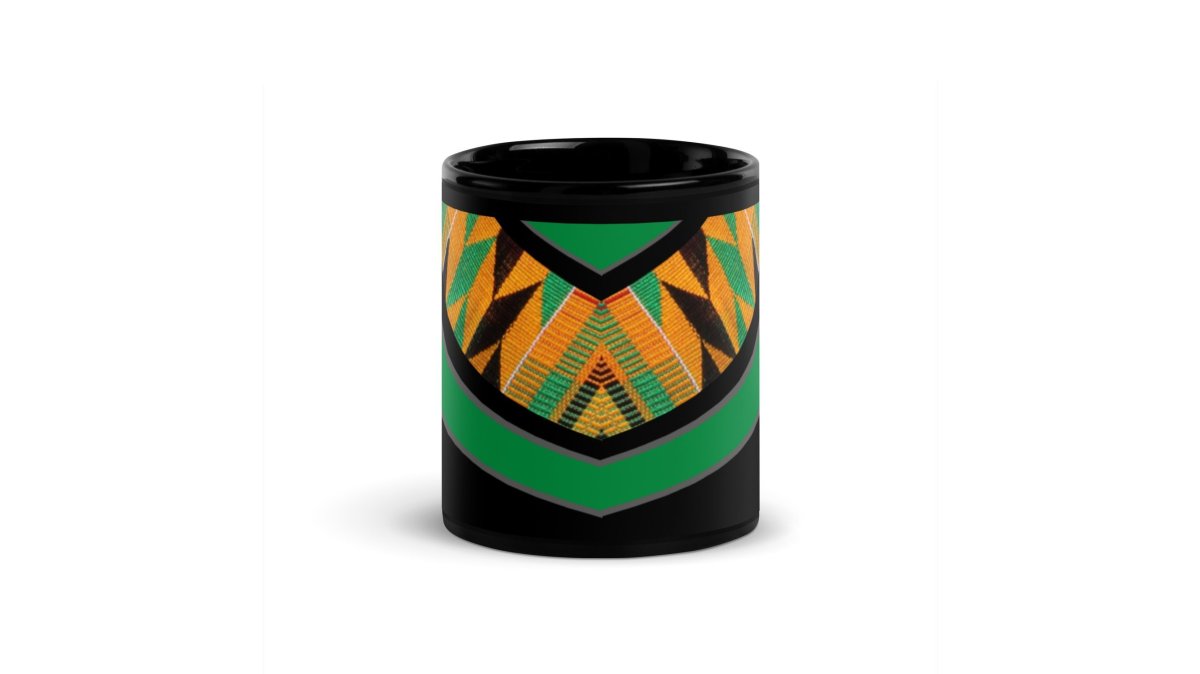
The same logic applies to accessories. A geometric tech case or stainless steel bottle carries a large print without any fit risk, which makes it the lowest-commitment way to try the trend. If you are unsure how a motif will behave on your frame, start with an accessory in the scale you are drawn to, live with it for a week, then translate that scale to clothing.
Shop the G4P Geometric Edit
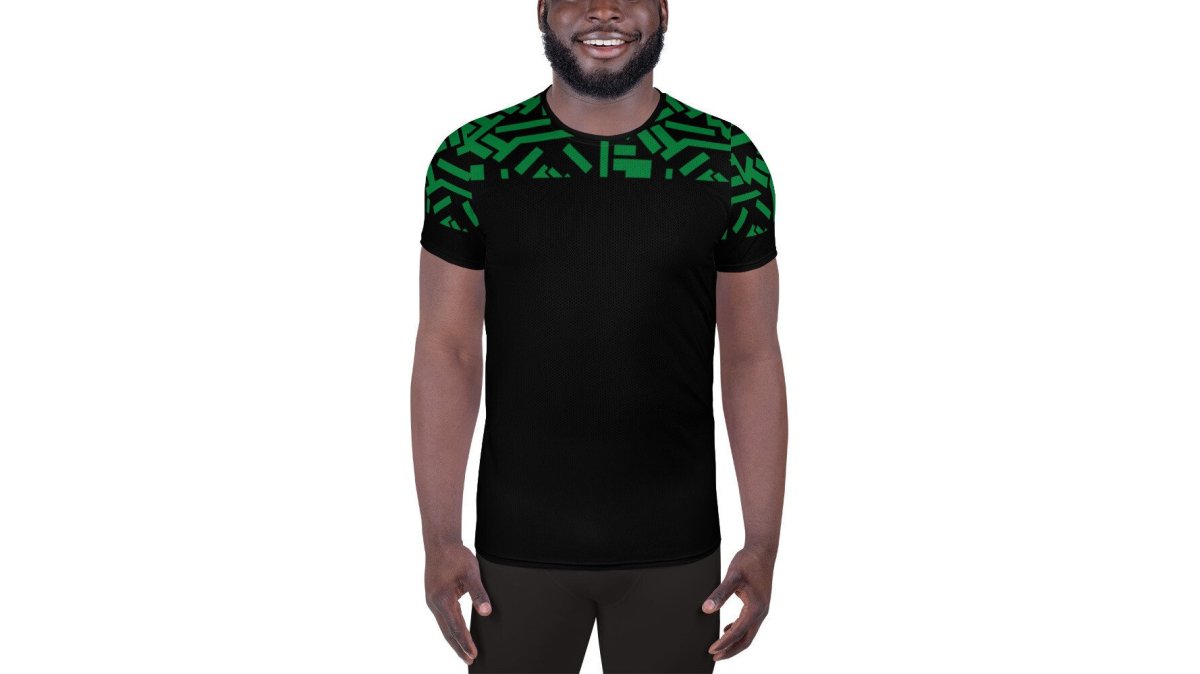
Our geometric edit is where the 2026 print trends meet everyday utility. G4P builds hoodies, windbreakers, stainless steel bottles and tech cases around exclusive geometric prints, so the trend lives on your body and in your bag rather than only in a lookbook.
If durability is your concern before buying, our guide answering whether geometric print hoodies are durable covers how the prints hold up over time. Shoppers weighing the brand itself can read our sustainable geometric lifestyle brand review for a closer look at the materials and the design identity behind the collection.
Best for: readers who want bold geometric design on functional pieces, not fast-fashion prints. Skip if: you want only solid, unbranded basics.
Frequently Asked Questions
Are geometric patterns in style in 2026?
Yes. Pinterest Predicts for 2026 highlights crisp chevrons and fan arches edged in chrome or brass as part of a returning retro aesthetic, while Plumager's SS26 forecast names mid-century squares as a print direction. Heuritech also lists dots and checked variations among its top forecasted trends. The safest approach is to pick one motif and build an outfit around it rather than wearing several at once.
How do you style geometric prints without overwhelming an outfit?
Keep one bold piece as the focus and let everything else stay plain. Pair a checked blazer with a solid tee and straight-leg jeans, or a striped hoodie with black trousers. Match the print's dominant colour to the rest of the outfit so the look reads as deliberate. If you want to mix patterns, vary the scale: small dots with wide stripes works, two large competing motifs rarely does.
What colours work best with geometric patterns?
Neutral anchors keep geometric prints wearable: black, white, navy, stone and grey let the pattern do the talking. Cherry red and brighter dopamine shades work as accents rather than full outfits. A simple rule is to pull one colour out of the print and repeat it in your shoes, bag or outer layer, which ties the whole look together without adding a second pattern.
Can you mix different geometric prints in one outfit?
You can, but scale and colour have to do the work. Pair a fine check with a wide stripe, or small polka dots with a larger geometric square motif, and keep both prints in the same colour family. Two bold prints at the same scale compete and look messy. If you are new to mixing, start with a patterned top and a patterned accessory rather than two full garments.
The 2026 geometric trend rewards people who choose scale and motif deliberately rather than buying every print on the rail. G4P makes that easier with exclusive geometrical design prints across a wide range of lifestyle and apparel products, from windbreakers and hoodies to stainless steel bottles and tech cases. Start with one geometric piece that fits how you actually dress, then build from there. Get started with G4P and wear the trend as functional art rather than a one-season purchase.